disk cleanup windows 10
If your computer is running slow or displaying messages indicating that the disk space is low, disk cleanup Windows 10 is the most convenient and effective solution. Unnecessary files tend to accumulate in your system over time, thereby slowing it down and reducing the disk space. This tutorial is intended to provide you with all the information you need to know about disk cleanup.
What is Disk Cleanup in Windows 10?
Disk Cleanup is a feature in Windows 10. It is a tool designed to help users clean temporary files, system cache, and other useless items from their computers.
It helps to scan the computer for items that are no longer needed. It is very useful in helping users free space without having to download other applications.
Why You Should Use Disk Cleanup in Windows 10
Regularly using disk cleanup Windows 10 offers several benefits:
Improved System Performance
Deleting junk files helps your system run faster by freeing up resources.
More Storage Space
Temporary files, old updates, and cache can take up gigabytes of space.
Faster Boot Time
A cleaner system often results in quicker startup times.
Reduced System Errors
Clearing corrupted temporary files can fix minor issues.
Types of Files Disk Cleanup Removes
Disk Cleanup targets several types of unnecessary files:
- Temporary internet files
- System cache files
- Recycle Bin contents
- Windows update leftovers
- Thumbnails
- Log files
- Downloaded program files
These files accumulate over time and can slow down your PC if not removed.
How to Open Disk Cleanup in Windows 10
There are multiple ways to access Disk Cleanup:
Method 1: Using Search
- Click on the Start menu
- Type “Disk Cleanup”
- Select the tool from the results
Method 2: Using Run Command
- Press Windows + R
- Type
cleanmgr - Press Enter
Method 3: From File Explorer
- Open “This PC”
- Right-click on your main drive (usually C:)
- Select “Properties”
- Click “Disk Cleanup”
Step-by-Step Guide to Using Disk Cleanup
Follow these steps for effective disk cleanup Windows 10:
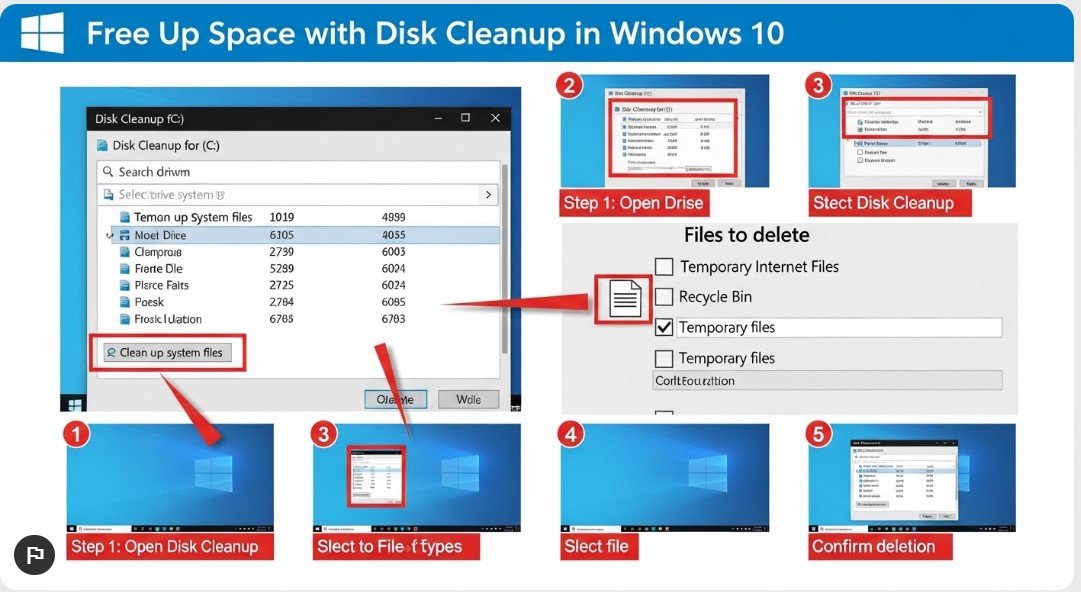
Step 1: Select Drive
Choose the drive you want to clean, usually the C: drive.
Step 2: Scan for Files
Disk Cleanup will analyze your system and show a list of files.
Step 3: Select Files to Delete
Check the boxes next to file types you want to remove.
Step 4: Confirm Deletion
Click “OK” and then “Delete Files” to confirm.
Advanced Disk Cleanup Options
For deeper cleaning, use advanced options:
Clean Up System Files
Click “Clean up system files” to remove:
- Old Windows updates
- System error memory dumps
- Previous Windows installations
Remove Previous Windows Installations
If you upgraded your system, old files may still exist and take up space.
Disk Cleanup vs Storage Sense
Storage Sense is another feature in Windows 10 that automates cleanup tasks.
Key Differences
| Feature | Disk Cleanup | Storage Sense |
|---|---|---|
| Manual Control | Yes | Limited |
| Automation | No | Yes |
| Deep Cleaning | Yes | Moderate |
| Ease of Use | Simple | Very Simple |
Using both together provides the best results.
How Often Should You Run Disk Cleanup?
For optimal performance:
- Light users: Once a month
- Regular users: Every 2 weeks
- Heavy users: Weekly
Regular maintenance ensures your system remains fast and efficient.
Tips to Maximize Disk Cleanup Efficiency
Delete Large Unused Files
Check your Downloads and Videos folders for unnecessary files.
Empty Recycle Bin Regularly
Files remain there until permanently deleted.
Use External Storage
Move large files like movies and backups to external drives.
Uninstall Unused Programs
Remove software you no longer use.
Common Mistakes to Avoid
Deleting Important Files
Always review selected files before deleting.
Ignoring System File Cleanup
Many users skip advanced cleanup options.
Not Running Cleanup Regularly
Irregular maintenance leads to storage issues.
Is Disk Cleanup Safe?
Yes, Disk Cleanup is completely safe when used properly. It only removes files that are not essential for system operation.
However, be cautious when deleting:
- Downloaded files
- Recycle Bin contents
- Previous Windows installations
Troubleshooting Disk Cleanup Issues
Disk Cleanup Not Opening
- Restart your system
- Run as administrator
Cleanup Not Freeing Space
- Use “Clean up system files”
- Check hidden large files
Slow Disk Cleanup
- Wait for scan to complete
- Close background apps
Alternative Tools for Disk Cleanup
While Disk Cleanup is effective, some users prefer third-party tools like:
- CCleaner
- BleachBit
- Advanced SystemCare
These tools offer additional features but should be used carefully.
Disk Cleanup for SSD vs HDD
SSD Users
- Avoid frequent deep cleaning
- Focus on removing unnecessary files only
HDD Users
- Regular cleanup improves speed significantly
Benefits for Gamers and Heavy Users
If you use your PC for gaming or heavy tasks:
- Frees up space for new games
- Reduces lag
- Improves loading times
Disk Cleanup and System Optimization
Disk cleanup Windows 10 is just one part of system optimization. Combine it with:
- Disk defragmentation (for HDD)
- Startup optimization
- Driver updates
How Disk Cleanup Impacts System Speed
Removing junk files improves:
- File access speed
- Application performance
- Overall system responsiveness
Automating Disk Cleanup in Windows 10
You can automate cleanup using:
Task Scheduler
Set Disk Cleanup to run automatically.
Storage Sense
Enable automatic deletion of temporary files.
Disk Cleanup for Low Storage Warning
When your system shows low storage:
- Run Disk Cleanup immediately
- Delete large unused files
- Move data to external storage
Final Thoughts
One of the best methods to maintain the performance of your computer is to regularly run disk cleanup windows 10. This process is not only safe and effective but also completely integrated into the operating system. This means that it is not complicated to perform and everyone can do it.
With the help of the steps and guidelines provided in this article, you will be able to maintain the performance of your computer even if you do not have enough knowledge in this field.
About the Author